LIVE DISPATCH: ACTIVE | Texas Open-Deck Specialists · Flatbed, Hotshot & Step Deck ONLY
Texas Dispatch Line: (800) 555-LOAD (5623)
DISPATCH OPERATIONS SPECIALIZED TEXAS OPEN-DECK TEAM

Our Open-Deck Dispatchers

Candor Trucking's dispatch team specializes exclusively in flatbed, hotshot, and step deck freight for owner-operators and small fleets across Texas and interstate lanes. Before requesting a quote, carriers need complete clarity on verified equipment knowledge, lane familiarity, and dispatch protocol.

Our dispatchers operate as an independent agency — not a freight brokerage. We never take carrier settlement custody, we verify broker credit before booking, and we enforce a strict zero forced dispatch policy. Learn more about our specialized open-deck truck dispatch for owner-operators.

Get an Open-Deck Dispatch Quote → Review 8-Stage Load Process
EXECUTIVE BRIEF Key Takeaways for Carriers
OPERATIONAL ROSTER

Meet the Candor Dispatch Team

Candor's dispatchers are identified by confirmed open-deck equipment mastery. Carriers consult directly with dispatchers who understand trailer clearances, axle group capacities, and active Texas spot lanes.

PERSONNEL VERIFICATION STANDARD

In accordance with Candor's transparency charter, dispatcher assignments are confirmed directly during carrier spec intake. All carrier peer references are verified with active owner-operators running our board prior to dispatch onboarding.

48' · 53' SKATEBOARDS
Senior Flatbed Dispatcher
Structural Steel · Pipe · Building Materials
  • Experience: 8+ Years Dedicated Open-Deck Dispatch
  • Equipment: 48ft & 53ft Standard Flatbeds, Spread Axles
  • Primary Corridors: Houston ↔ Permian Basin, DFW ↔ I-35 Industrial, Gulf Coast
  • Languages: English (Phone & Dispatch), Spanish (Written Support)

Specializes in heavy structural steel, oilfield pipe, and precast concrete logistics. Expert in calculating 50% WLL chain requirements, 4-inch strap placement, and tarp pay negotiation on Texas regional runs.

ACTIVE ON TEXAS LANES
35' · 40' GOOSENECKS
Hotshot Freight Specialist
Expedited Oilfield · Machinery · Critical Freight
  • Experience: 6+ Years Class 4-5 Dually & Gooseneck Logistics
  • Equipment: 40ft Goosenecks, 15k–20k Payload Combinations
  • Primary Corridors: Permian Basin (Midland/Odessa), Eagle Ford, San Antonio, I-20
  • Languages: English (Phone & Dispatch), Spanish (Written Support)

Focuses on actual truck and trailer gross weight limits, pin weights, and non-CDL / CDL payload legalities. Screens out overloaded freight to protect drivers from scale station fines and commercial downtime.

ACTIVE ON TEXAS LANES
DROP DECKS · TALL LOADS
Step Deck Specialist
Tall Industrial Cargo · Machinery · Port Freight
  • Experience: 9+ Years Specialized Step Deck Logistics
  • Equipment: 53ft Step Decks, Low-Profile Ramps, Beavertails
  • Primary Corridors: Port Houston ↔ Central Texas, I-10 Petrochemical, Cross-Border
  • Languages: English (Phone & Dispatch), Spanish (Written Support)

Monitors critical cargo heights against the Texas 14-foot maximum legal limit without permitting. Expert at booking top deck / lower deck combinations and managing oversize escort requirements.

ACTIVE ON TEXAS LANES
Candor Trucking dispatcher experience
Equipment Division Operational Focus Trailer Types Texas / Interstate Corridors Communication Protocol
Flatbed Dispatch Heavy Industrial, Pipe & Building Materials 48' & 53' Standard Flatbed / Spread Axle Houston, Permian Basin, DFW, Gulf Coast, I-10, I-35 English Hotline; Spanish via Email & Message
Hotshot Dispatch Expedited Oilfield Tools & Equipment 35' & 40' Gooseneck Trailers Midland/Odessa, Permian Basin, Eagle Ford, I-20, US-285 English Hotline; Spanish via Email & Message
Step Deck Dispatch Tall Machinery, Port & Oversize Equipment 53' Step Deck / Drop Deck Port Houston, Petrochemical Belt, DFW, Interstate Connectors English Hotline; Spanish via Email & Message

Source: Candor Trucking personnel operational records. Learn more on our about Candor Trucking overview.

EQUIPMENT EXPERTISE

What Makes Open-Deck Dispatch Different?

Open-deck dispatching cannot be run with a generic freight broker mentality. Every load must be engineered to fit your trailer deck height, axle limits, securement hardware, and commercial accessorial terms before you sign a rate confirmation.
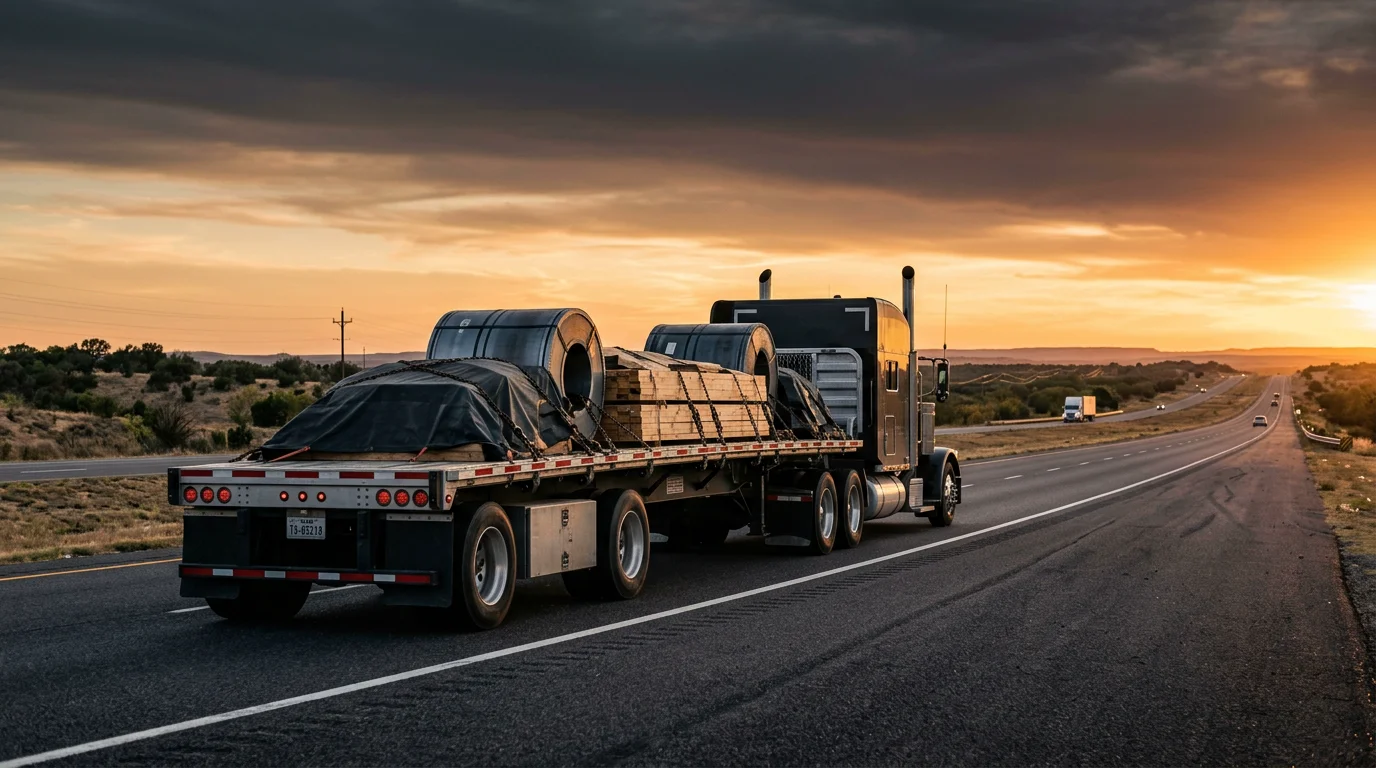
Unbranded flatbed carrying secured industrial cargo on a Texas highway
FLATBED · 48'/53'
Flatbed Dispatch Knowledge

Confirm trailer configuration, available deck space, cargo dimensions, weight, securement, tarp requirements, and site restrictions.

  • Confirm cargo length, width, height, and weight
  • Verify tarp requirements (4ft / 8ft drop) and tarp pay
  • Match aggregate WLL chains & 4" straps to cargo
  • Enforce appointment feasibility and detention terms
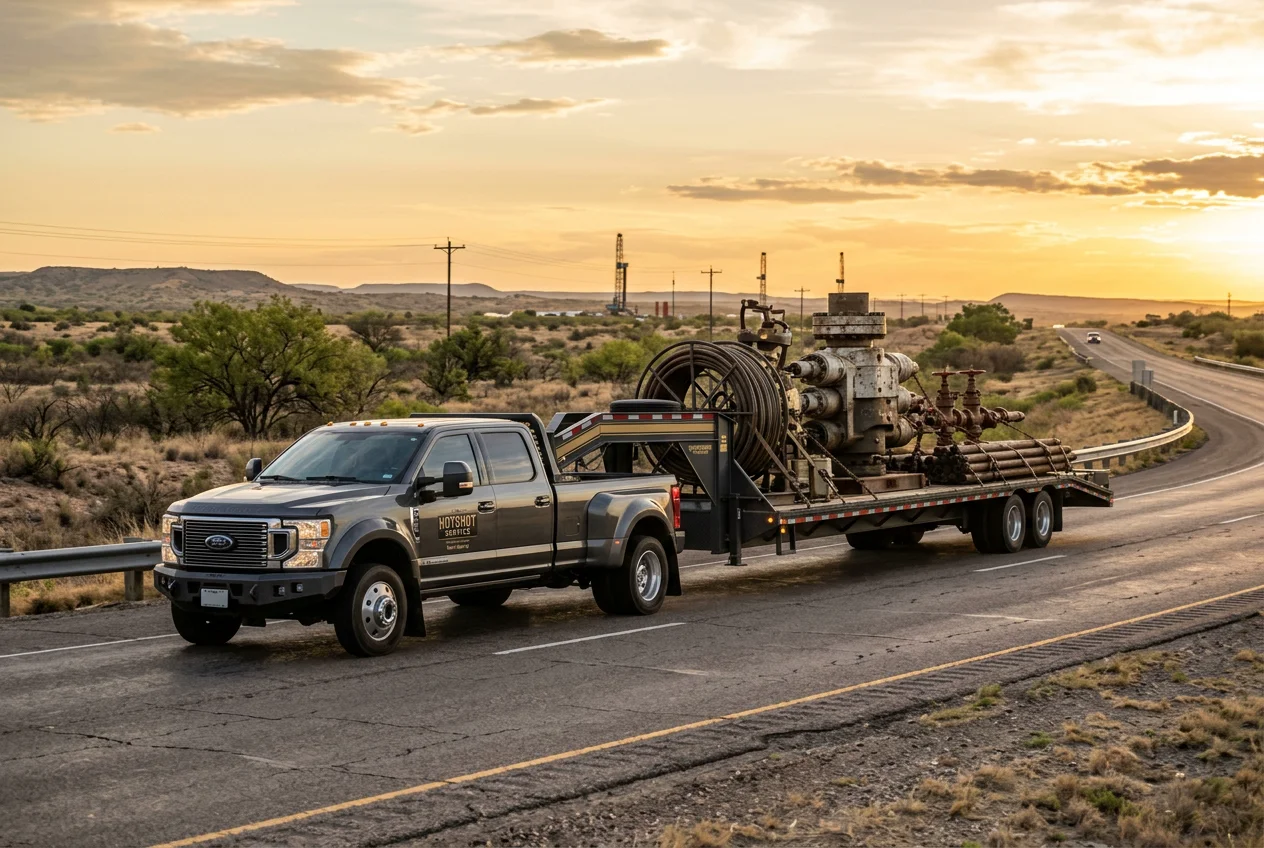
Hotshot truck carrying industrial equipment in the Permian Basin
HOTSHOT · 35'/40'
Hotshot Dispatch Knowledge

Screen loads against actual truck and trailer combination capacity rather than assuming every gooseneck can legally haul the same weight.

  • Confirm exact net payload capacity (15k–20k lbs)
  • Verify trailer deck dimensions and dove tail clearance
  • Screen axle weights and pin weight distribution
  • Ensure oilfield site access and loading assistance
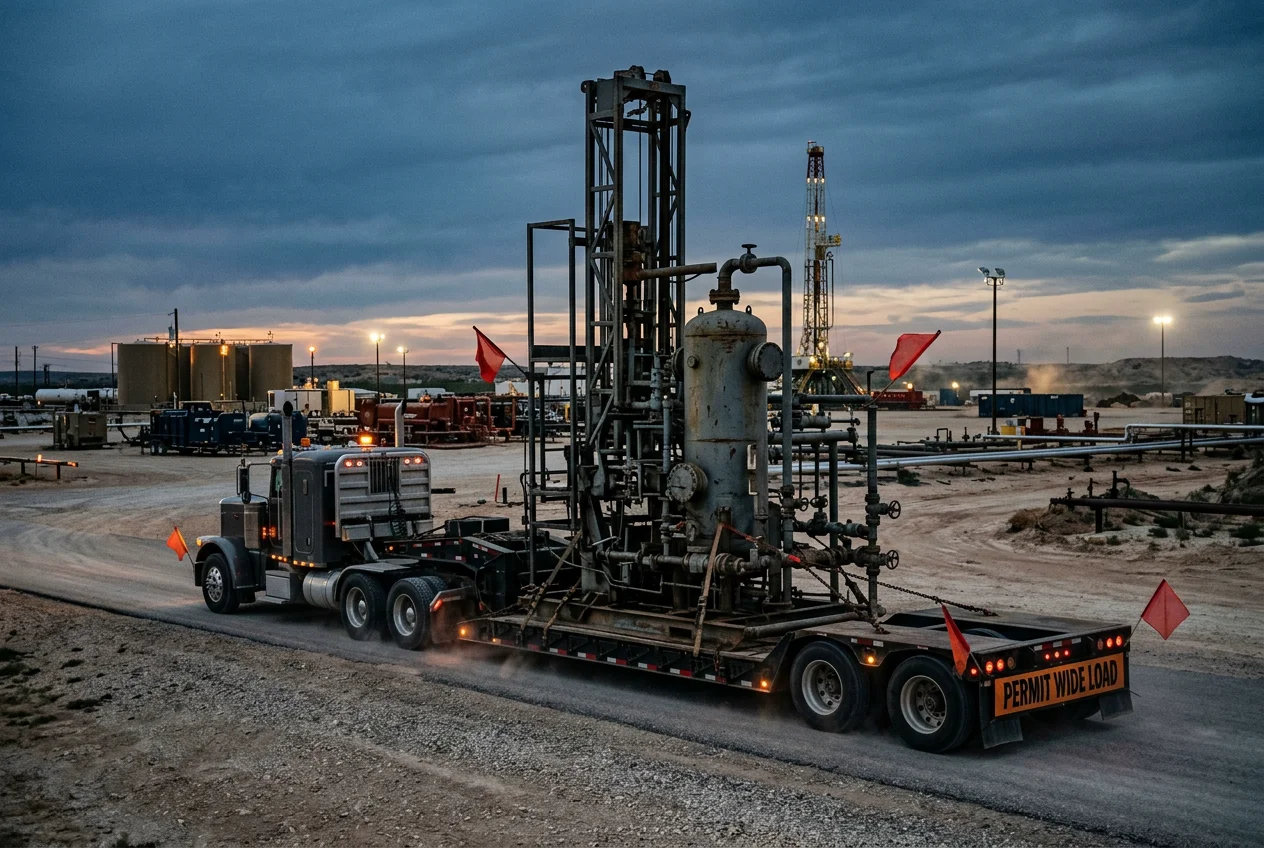
Step-deck trailer carrying industrial equipment through a Texas freight corridor
STEP DECK · 53'
Step-Deck Dispatch Knowledge

Account for lower deck height to move tall machinery legally without costly over-height permits while maximizing freight revenue.

  • Verify upper deck (10–11ft) & bottom deck (37–43ft) lengths
  • Confirm total loaded height remains under Texas 14ft limit
  • Screen ramp requirements for wheeled machinery
  • Negotiate permit and escort accessorials upfront
Open-deck equipment checks
Equipment Type Primary Dispatch Screening Checks Regulatory / Accessorial Watch-Points
Flatbed Deck configuration, cargo dimensions, weight, securement, tarp requirement, pickup/delivery conditions FMCSA 50% WLL rule; mandatory tarp compensation ($50–$150); detention after 2 hours
Hotshot Actual truck/trailer configuration, net payload, deck dimensions, cargo dimensions, axle considerations Scale gross-weight verification; non-CDL vs CDL weight ceilings; oilfield road conditions
Step Deck Deck configuration, cargo dimensions, total height, weight, securement, route/permit requirements TxDMV 14-foot maximum legal height limit; over-height permit routing; top-deck freight fit

Source: FMCSA cargo-securement rules and TxDMV Texas size and weight limits.
REGIONAL INTELLIGENCE

Which Texas Freight Lanes Does Candor Understand?

Candor operates in the primary industrial, energy, and construction corridors across Texas. We understand freight flow patterns, backhaul realities, and regional rate dynamics.

Texas open-deck markets and corridors requiring Candor-specific verification
Market / Corridor Open-Deck Freight Relevance Operational Characteristics
Permian Basin (Midland / Odessa) Oilfield machinery, drill tools, casing pipe, industrial supplies High outbound demand for equipment; challenging backhaul rates; expedited hotshot premium lanes
Port Houston & Petrochemical Belt Imported structural steel, project cargo, fabrication units High-density flatbed and step deck staging; strict TWIC/facility appointment scheduling
Dallas-Fort Worth (DFW Hub) Commercial construction steel, precast concrete, regional manufacturing Major cross-dock hub connecting I-35 and I-45; fast turnaround distribution lanes
Houston / Gulf Coast Industrial Refinery components, chemical skid units, heavy industrial pipe Heavy axle weight screening; accessorial enforcement for specialized facility offloading
I-10 Freight Corridor Major East-West Texas arterial (Houston ↔ San Antonio ↔ El Paso) High long-haul volume; optimal linehaul balance for multi-state open-deck transits
I-20 Freight Corridor North Texas ↔ West Texas oilfield connector (DFW ↔ Abilene ↔ Midland) Rapid expedited hotshot transit; continuous oilfield tool hot-shotting
I-35 Freight Corridor Central Texas manufacturing & NAFTA spine (Laredo ↔ San Antonio ↔ Austin ↔ DFW) Heavy cross-border trade staging; high volume regional building materials
I-45 Freight Corridor Houston ↔ Dallas-Fort Worth Golden Triangle connector High-speed turnaround; balanced intraday freight movement for regional skateboards
US-285 (Permian Artery) Heavy oilfield service route connecting Pecos, Carlsbad, and Permian sites Severe road wear conditions; mandatory heavy securement and dust protection checks

Source: Texas open-deck freight corridor analysis. Corridors reflect authentic operational geographic context.

DISPATCH WORKFLOW

What Does Your Dispatcher Handle?

A professional dispatcher handles end-to-end load management — screening freight, vetting broker credit, negotiating rates, locking down accessorials, and tracking documentation through final billing.

1
Find Potential Freight

Identify open-deck loads matching your exact trailer specs, deadhead range, location, and preferred operating territory.

2
Screen the Load Rigorously

Confirm commodity, piece count, dimensions, weight, pickup/delivery appointment windows, tarp requirements, and loading equipment.

3
Vet the Broker's Credit

Screen broker payment history (Ansonia, RTS, Truckstop credit boards) with minimum 90+ score and verified active BMC-84 bond.

4
Negotiate Rate & Accessorials

Push for top linehaul dollars while getting detention ($75–$100/hr), TONU ($150–$250), layover, and tarp pay printed directly on the rate con.

5
Carrier Final Approval

Present the unedited rate confirmation to you. You retain 100% final authority to accept or decline. Zero forced dispatch.

6
Document & Set Up Load

Submit carrier packet, certificates of insurance, and driver information directly to the broker under your own MC/DOT authority.

7
Manage Transit Exceptions

Handle facility loading delays, communicate arrival times, timestamp detention arrival, and coordinate immediate support if issues arise.

8
Close Paperwork for Billing

Verify signed Bill of Lading (BOL), accessorial time sheets, and delivery receipts so you can invoice factoring or broker immediately.

See the complete operational breakdown on how our dispatch process works.

REGULATORY COMPLIANCE

What Does FMCSA Require for Cargo Securement?

Federal regulations require strict cargo securement calculations on every open-deck trailer. A dispatcher must understand these rules to prevent illegal load acceptance and roadside violations.

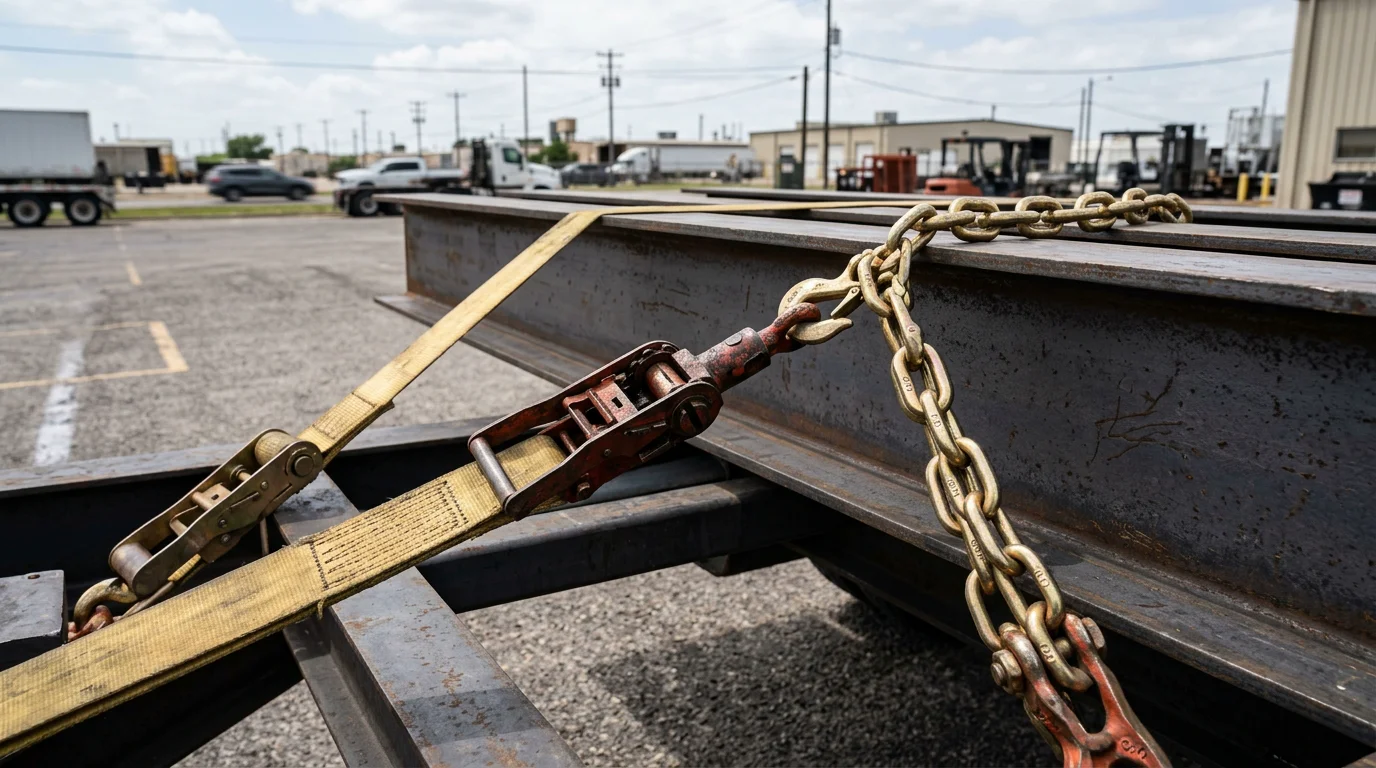
Cargo securement equipment on a flatbed trailer carrying steel
FMCSA 49 CFR § 393.102

50% Working Load Limit (WLL) Mandate

FMCSA requires that the aggregate working load limit (WLL) of any cargo securement system must be at least one-half (50%) of the total weight of the article or group of articles being secured.

Our dispatchers verify that the piece weights listed on broker load sheets are communicated accurately so you have adequate Grade 70 transport chains, ratchet binders, and 4-inch heavy-duty straps on your deck before arriving at the shipper.

Selected FMCSA cargo-securement requirements
Regulatory Requirement FMCSA Safety Standard Open-Deck Practical Implication
Aggregate Working Load Limit (WLL) At least 50% of the total cargo weight being secured A 44,000 lb steel beam load requires securement devices with an aggregate WLL of at least 22,000 lbs
Minimum Tiedown Count Depends on cargo length, weight, and whether cargo is blocked Articles over 10 feet require a minimum of two tiedowns, with additional tiedowns every 10 feet or fraction thereof
Rolling Cargo Restraints Must be restrained against rolling by chocks, wedges, or cradles Pipe, coils, and rounded machinery require engineered chocking plus direct tiedowns to prevent lateral shift

Source: FMCSA Cargo Securement Rules, 49 CFR § 393.100–393.136, accessed 2026-09-24.

PRE-BOOKING AUDIT

What Does Candor Check Before Booking an Open-Deck Load?

Before presenting any load for carrier approval, our dispatchers execute a comprehensive 10-point operational pre-flight check to eliminate roadside surprises.

Open-deck load screening checklist
Audit Factor What the Dispatcher Verifies Before Calling You Carrier Protection Objective
1. Equipment Match Flatbed (48'/53'), hotshot (35'/40'), or step deck configuration match Eliminates wasted time on unserviceable freight
2. Cargo Specifications Exact commodity, packaging, piece count, individual piece dimensions, and true weight Guarantees trailer deck space accommodates every item
3. Trailer Capacity Carrier payload ceiling, axle spacing, and usable deck length Prevents scale axle-weight violations across state weigh stations
4. Securement Hardware Required chain grade (Grade 70/80), ratchet binders, 4" straps, and dunnage Ensures 50% WLL compliance before rolling into facility
5. Tarp Requirements Need for 4ft, 6ft, or 8ft drop tarps and agreed tarp compensation Guarantees carrier receives $50–$150 tarp pay on the rate con
6. Physical Dimensions Total width, height, and length measured against route bridge clearances Protects against low-overpass hazards and legal height limits
7. Permitting Needs Oversize, overweight, or superload permit requirements across Texas corridors Confirms whether permit fees and escorts are paid by broker upfront
8. Pickup Conditions Overhead crane vs forklift loading, mud/yard conditions, and appointment windows Prevents trailer damage and unexpected loading delays
9. Delivery Conditions Jobsite access, crane arrival scheduling, and receiver appointment rules Reduces unpaid detention and jobsite standoff times
10. Commercial Terms Linehaul rate, fuel surcharge, detention ($75–$100/hr), TONU ($150–$250), and payment terms Enforces original, unedited rate confirmations with no skims

Source: Candor Trucking commercial dispatch screening protocols.

TXDMV BENCHMARKS

What Texas Size and Weight Limits Should You Check?

Texas law establishes clear non-permitted dimensional and weight ceilings. Our dispatchers verify every load against official TxDMV criteria prior to acceptance.

Current Texas general size and weight limits (TxDMV)
Measurement / Vehicle Group General Legal Limit (Without Permit) Operational Notes for Open-Deck Drivers
Width 8 ft 6 in (102 inches) Loads exceeding 8'6" require TxDMV oversize permits and safety flags
Height 14 ft (168 inches) Texas legal limit is 14ft. Anything exceeding 14ft requires route surveys and permits
Semitrailer Length 59 ft (in a two-vehicle combination) Standard 48ft and 53ft flatbeds and step decks operate comfortably within limits
Gross Vehicle Weight 80,000 lbs Total combined truck, trailer, fuel, and cargo weight ceiling
Single Axle Group 20,000 lbs Applies to individual steering or drive axles
Tandem Axle Group 34,000 lbs Standard tractor drive tandems and trailer tandems
Triple Axle Group 42,000 lbs Applies to tri-axle trailers hauling heavy equipment
Quad Axle Group 50,000 lbs Specialized heavy-haul and multi-axle configurations

Source: TxDMV Texas Size/Weight Limits, accessed 2026-09-24.

MARKET REALITY

What Is the Current Flatbed Rate Benchmark?

Transparent market data keeps dispatch expectations realistic. We reference industry benchmarks to ensure carriers negotiate from an informed position.

DAT flatbed spot linehaul benchmarks for week ending September 18, 2026
Benchmark Scope Reported Linehaul Average Freight Scope & Exclusion Details
U.S. National Flatbed Spot Linehaul $2.60 per mile Excludes fuel surcharges and accessorials. Represents national spot averages across all lanes
South Central Outbound Flatbed Average $2.49 per mile Regional benchmark covering outbound Texas and South Central corridors. Excludes fuel

Source: DAT Freight & Analytics, Flatbed Report, September 21, 2026. Benchmarks are independent market indicators — not guaranteed rates or Candor quotes.

Candor operating evidence & governance
Operational Metric Candor Standard / Operating Policy Verification Status
Equipment Scope 100% Flatbed, Hotshot, and Step Deck Exclusivity VERIFIED STANDARD
Dispatch Fee 7% to 10% per completed load; zero upfront setup fees; zero monthly retainers VERIFIED STANDARD
Carrier Authority Control Original unedited rate confirmation direct to carrier; zero forced dispatch VERIFIED STANDARD
Broker Screening Minimum 90+ credit score & verified BMC-84 surety bond on every broker VERIFIED STANDARD
Accessorial Enforcement Detention ($75–$100/hr after 2 hrs), TONU ($150–$250), layover ($250–$400), tarp pay VERIFIED STANDARD
Peer References Direct phone reference access to active owner-operators running our board VERIFIED STANDARD

Source: Candor Trucking operating governance and verified carrier agreements.

TRANSPARENT BOUNDARIES

What Can a Dispatcher Promise?

Trust begins with honesty. We separate what a dedicated dispatch service directly controls from the external macroeconomic realities of the trucking industry.

What Your Dispatcher Can Control

  • Thorough load screening (dimensions, weight, tarping, permits)
  • Aggressive rate and accessorial negotiation before booking
  • Broker credit and payment bond vetting (Ansonia / RTS)
  • Accurate documentation and rate confirmation delivery
  • Prompt, clear communication while you are on the road
  • Enforcing your final approval on every single load decision
  • Securing detention timestamps when shippers delay loading

External Factors Beyond Dispatch Control

  • National macroeconomic freight spot rates and fuel fluctuations
  • Unpredictable weather closures on I-10, I-35, or Permian roads
  • Shipper or receiver mechanical breakdown delays
  • Shipper facility personnel shortages causing wait times
  • Sudden market demand shifts in regional construction sectors
  • Individual broker freight insurance restrictions
VERIFIED FEEDBACK

What Do Carriers Say About Candor?

Candor publishes only genuine carrier feedback with direct source attribution. We never use fabricated quotes, generic testimonials, or anonymous claims.

VERIFIED CARRIER PEER REFERENCES AVAILABLE

Before signing an agreement with Candor, owner-operators are invited to speak directly with active peer carriers running open-deck trailers on our board. Visit our full carrier reviews page for audited feedback.

CONNECT WITH A DISPATCHER

How Do You Talk With a Candor Dispatcher?

Tell us your equipment configuration, current staging location, and target lanes. A specialized open-deck dispatcher will review your operating profile and discuss active freight options.

Or call our direct line: (800) 555-LOAD (5623)
FREQUENTLY ASKED QUESTIONS

Frequently Asked Questions

Common questions from owner-operators and small fleet owners regarding our team, equipment handling, fees, and operational policies.

Who are Candor Trucking's dispatchers?

Candor Trucking's dispatchers are experienced open-deck professionals specializing exclusively in flatbed, hotshot, and step-deck equipment across Texas and national corridors. Every dispatcher understands deck heights, weight limits, and cargo securement regulations.

Does Candor have Spanish-speaking dispatchers?

Yes, Spanish support is provided via email, text, and WhatsApp messaging. Direct telephone dispatch lines are conducted in English to ensure clear verbal rate confirmations with brokers.

What does Candor charge for dispatch?

Candor operates on a transparent 7% to 10% fee per completed load. There are zero upfront setup fees, zero weekly administrative retainers, and zero charges if your truck is sitting or you book your own load.

Can I cancel Candor's dispatch service?

Yes. Candor operates under a strict zero forced dispatch model with no long-term lock-in contracts. You retain complete authority and can pause or cancel dispatch services at any time without penalty.

Who approves a load before it is booked?

You do. Every load rate confirmation is presented to you with complete rate, commodity, lane, and accessorial details. We never book a load without your explicit prior approval.

How does Candor handle detention and other accessorials?

We negotiate detention ($75–$100/hr after 2 hours), TONU ($150–$250), layover ($250–$400), and tarp pay ($50–$150) directly onto the signed rate confirmation before your wheels start turning, protecting your revenue when shippers cause delays.